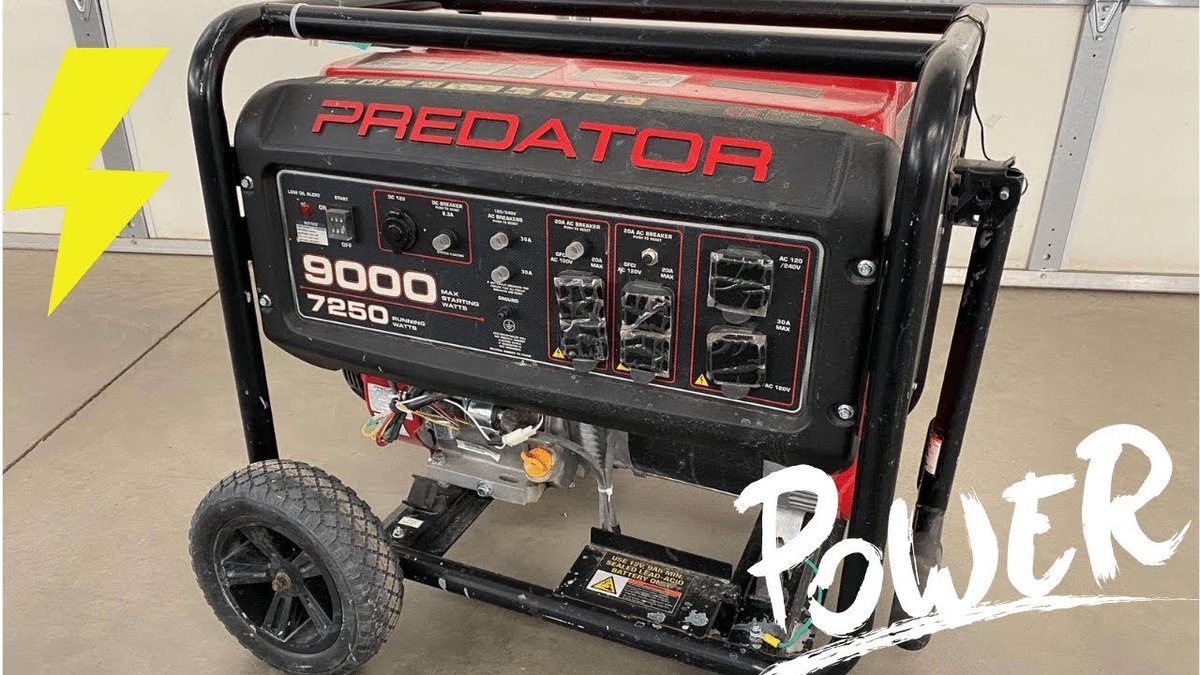
When the lights go out, a reliable backup power source isn't just a convenience—it's peace of mind. For many, the Predator 13000 Watt Generator stands as a robust solution, capable of powering everything from essential home appliances to demanding construction tools. But harnessing its full potential, and doing so safely, hinges on a clear understanding of Predator 13000 Watt Generator setup, operation, and maintenance. This guide will walk you through everything you need to know, from unboxing to long-term storage, ensuring your generator is always ready when you need it most.
At a Glance: Your Predator 13000 Power Partner
- Massive Power: Delivers 13,000 peak watts and 10,500 running watts, suitable for whole-house backup (with a transfer switch) or job site demands.
- Safety First: Absolutely never use indoors due to carbon monoxide risk. Always ground the unit properly.
- Fuel & Oil: Requires 87+ octane unleaded gasoline (max E10 ethanol) and SAE 10W-30 oil. Check oil before every use.
- Easy Start: Features both electric start (with battery) and a recoil pull-start backup.
- Maintenance Matters: Regular oil changes, air filter cleaning, and spark plug checks are critical for longevity and warranty.
- Smart Storage: Drain fuel and prep the engine for storage longer than 20 days to prevent common carburetor issues.
- Professional Help: For home backup, always consult a licensed electrician for transfer switch installation.
Why the Predator 13000? Unleashing Serious Power
The Predator 13000 isn't just another generator; it's a workhorse designed for substantial power needs. Outfitted with a PREDATOR® 458cc engine, it reliably churns out 10,500 running watts and can handle surges up to 13,000 peak watts. This kind of output means you can keep your refrigerator running, lights on, and critical electronics charged during an outage, or power multiple heavy-duty tools on a job site.
Its impressive capability, coupled with a competitive price point often enhanced by Harbor Freight's frequent discounts, makes the Predator 13000 watt generator a compelling choice for those seeking serious power without breaking the bank. Features like an integrated digital display for monitoring voltage, frequency, and run hours, along with an automatic idle-down function to conserve fuel and reduce noise, add to its appeal. For comprehensive details on its capabilities and features, consider reviewing our full breakdown of the Predator 13000 watt generator.
Remember that while the standard model is powerful, it might not be CARB-compliant for all states. Always check local regulations and consider the CARB-compliant version if you reside in such areas.
Safety First: Non-Negotiable Rules for Generator Use
Before you even think about firing up your generator, understanding and adhering to critical safety protocols is paramount. These aren't suggestions; they are mandates that can prevent serious injury or death.
The Invisible Killer: Carbon Monoxide (CO) Hazard
Generator exhaust contains carbon monoxide (CO), an odorless, colorless gas that can be fatal in minutes.
- NEVER use a generator indoors. This includes homes, garages, basements, crawl spaces, or sheds. Even with doors and windows open, CO can build to deadly levels.
- Always use OUTSIDE and far away. Position your generator at least 20 feet from any windows, doors, or vents to prevent exhaust fumes from entering occupied spaces.
- Symptoms: If you or anyone nearby experiences headache, dizziness, nausea, or weakness, get to fresh air immediately. Seek medical attention if symptoms persist.
Fire & Explosion Hazard: Handling Fuel Safely
Gasoline and its fumes are highly flammable and explosive. Treat them with extreme caution.
- Proper Fuel Storage: Store gasoline in approved containers in a cool, well-ventilated area, away from living spaces and ignition sources.
- Extinguishers Ready: Keep an ABC class fire extinguisher nearby when operating the generator.
- Cool Engine, Clean Area: Never refuel a generator while the engine is running or hot. Clean up any spilled gasoline immediately and thoroughly before starting the generator.
- No Open Flames: Do not operate the generator near pilot lights, open flames, or other ignition sources.
- Clear Zone: Never store fuel or other flammable materials near the generator's engine.
Electrical Shock Hazard: Connecting with Care
Improper electrical connections can lead to severe shock or electrocution, as well as damage to your generator or home.
- Professional Installation: All connections to a building's electrical system, especially for standby power, must be installed by a trained, licensed electrician. This includes the use of a transfer switch to isolate the generator from utility power, preventing dangerous backfeed.
- Proper Grounding: Before operation, the generator must be properly grounded. Use a #6 AWG wire connected from the generator's grounding terminal to an earth-driven copper or brass rod, at least 24 inches deep.
- Stay Dry: Do not connect or disconnect electrical loads while standing in water or on wet ground.
- Avoid Energized Parts: Never touch energized parts of the generator or connected cables.
General Operating Precautions
Beyond the major hazards, other precautions ensure safe use:
- Personal Protective Equipment (PPE): Wear ANSI-approved safety goggles, heavy-duty work gloves, a dust mask/respirator, and hearing protection, as noise levels can exceed 85 dBA.
- Keep Your Distance: Maintain at least six feet of distance for children and spectators from the operating generator.
- Beware of Hot Parts: Engine components get extremely hot during operation. Allow them to cool before touching.
- Ventilation is Key: Never cover the generator while it's running. This can lead to overheating and fire.
- Inspect Before Use: Always check for damaged, loose, or missing parts, and ensure there are no fuel system leaks.
- California Prop 65 Warning: Be aware that this product contains chemicals known to the State of California to cause cancer and birth defects or other reproductive harm.
Getting Started: Predator 13000 Setup Essentials
Proper initial setup is crucial for reliable operation and to avoid voiding your warranty. Take your time with these steps.
Unboxing and Placement
- Inspect for Damage: Carefully unbox your Predator 13000 watt generator and inspect it for any signs of shipping damage, loose parts, or missing components. If anything is amiss, contact Harbor Freight customer service.
- Choose a Spot: Select a flat, level, and well-ventilated outdoor surface, at least 20 feet from any building openings. Ensure the ground is dry. The generator weighs approximately 206 pounds, so factor in transport to its operating location.
Fueling Up: The Right Gas for the Job
Your Predator 13000 is a gasoline-only unit out of the box (aftermarket conversion kits exist but may affect warranty).
- Fuel Type: Use only fresh, clean, unleaded gasoline with an octane rating of 87 or higher.
- Ethanol Warning: Do NOT use gasoline with more than 10% ethanol (E10) or E85 ethanol. Higher ethanol content can damage the fuel system.
- Filling the Tank: With the engine off and cool, carefully fill the 8.75-gallon fuel tank to about 1 inch below the fill neck. This allows for fuel expansion.
- Clean Up Spills: Wipe up any spilled fuel immediately before attempting to start the generator.
Engine Oil: The Lifeblood of Your Generator
Operating your generator with insufficient or no oil will quickly destroy the engine and void your warranty.
- Capacity & Type: The Predator 13000 requires approximately 1.2 quarts of SAE 10W-30 engine oil. Consult your manual for alternative viscosities based on ambient temperature.
- Check Before Every Use: Always check the oil level before each operation. The engine must be stopped and on a level surface. Add oil to the "full" mark on the dipstick.
- Initial Fill: For a brand-new generator, you must add oil before its first start. It ships without oil for transport.
Ensuring Proper Grounding
As mentioned in the safety section, grounding is critical.
- Connection: Securely connect a #6 AWG copper wire from the generator's grounding terminal to a copper or brass grounding rod driven at least 24 inches into the earth. This helps protect against electrical shock in the event of a fault.
Spark Arrestor Check
- Regulations: Ensure the spark arrestor is properly installed. This prevents hot embers from escaping the exhaust, which is particularly important in wooded or dry areas. Contact local fire agencies for specific regulations in your area.
Bringing it to Life: Operating Your Predator 13000
Once safely set up, operating your generator is a straightforward process.
The Pre-Start Checklist
Before attempting to start:
- Unplug All Loads: Ensure nothing is plugged into the generator outlets.
- Verify Fuel & Oil: Double-check that the fuel tank is adequately filled and the engine oil is at the full mark.
- Generator Grounded: Confirm the grounding wire is securely connected.
Starting Procedure
Your Predator 13000 features both an electric start and a recoil pull-start as a backup.
- Choke Position:
- Cold Engine: Move the Choke Lever to the "CHOKE" position.
- Warm Engine: Leave the Choke Lever in the "RUN" position.
- Open Fuel Valve: Turn the Fuel Valve to the "ON" position.
- Engine Switch: Turn the Engine Switch to "ON".
- Electric Start: Insert the key into the ignition and turn it to the "START" position. Release the key once the engine starts.
- Battery Maintenance: The electric start relies on a battery. Keep it on a maintenance charger when the generator is not in use to ensure it's ready.
- Recoil Start (Backup):
- Grasp the Starter Handle firmly.
- Pull the handle slowly several times to "prime" the engine.
- Then, pull gently until you feel resistance.
- Finally, pull the handle quickly and smoothly upwards. Repeat if necessary until the engine starts.
- Caution: Do not allow the starter handle to snap back against the engine; guide it gently.
- Adjust Choke: Once the engine starts and runs for several seconds, slowly move the Choke Lever back to the "RUN" position.
- Warm-Up: Allow the generator to run at no load for five minutes. This stabilizes the engine before you connect any electrical devices.
Connecting Electrical Loads: The Smart Way
Connecting devices correctly prevents damage to your appliances and the generator.
- Calculate Your Watts:
- Running Watts: Add up the continuous running wattage for all items you plan to power. This sum must be less than 10,500 running watts.
- Starting Watts (Surge): Identify the single item with the highest starting wattage (e.g., a refrigerator motor kicking on). Add this to your total running watts. This grand total must be less than 13,000 peak watts.
- Estimation: For items with motors, their rated wattage can be used as an estimate for additional startup watts. Lights and heaters typically have no additional startup watts.
- Connection Sequence (to prevent damage):
- High-Wattage First: Begin by connecting items that require the most wattage.
- Inductive Loads: Next, connect "inductive" load appliances, such as small hand tools or certain small kitchen appliances.
- Lighting: Plug in any lighting next.
- Sensitive Electronics LAST: For voltage-sensitive appliances like TVs, computers, microwaves, or cordless phones, connect them last. Always use a UL® Listed voltage surge protector (not included) for these devices to prevent damage from power fluctuations.
- Avoid Overloading:
- Never exceed the generator's rated capacity. Operating beyond 10,500 running watts for extended periods can damage the generator. Power levels between rated and maximum capacity should not be sustained for more than 30 minutes.
- Distribute Loads: Try to distribute your loads evenly across the available outlets.
- Circuit Breakers: If a circuit breaker trips, unplug all connected loads, allow the generator to cool, reset the breaker, restart the engine, and then re-attach loads one by one, ensuring you don't overload the circuit.
Stopping the Generator
Under Normal Conditions:
- Turn Off & Unplug Loads: Disconnect and turn off all electrical devices connected to the generator.
- Engine Switch Off: Turn the Engine Switch to "OFF".
- Close Fuel Valve: Turn the Fuel Valve to the "OFF" position. This helps to run the carburetor dry, preventing fuel-related issues during storage.
In an Emergency:
- Simply turn the Engine Switch to "OFF". Be aware that shutting off the generator under load may potentially damage the generator and/or the connected equipment.
Keeping It Running: Essential Maintenance Schedule
Regular maintenance is key to the longevity and reliability of your Predator 13000 watt generator. Ignoring these steps can lead to premature wear, poor performance, and even void your warranty.
Before Any Maintenance: Always turn off the engine switch, allow the engine to cool completely, and disconnect the spark plug cap to prevent accidental starting. Do not use damaged equipment.
Maintenance Schedule
| Interval | Action | Notes |
|---|---|---|
| Before Each Use | Brush off outside; Check engine oil level | Ensure proper oil level. |
| Monthly or Every 20 Hours | Check air cleaner; Check deposit cup | Clean or replace air cleaner as needed. |
| Every 3 Months or 50 Hours | Change engine oil; Clean/replace air cleaner | First oil change after 20 hours (break-in). More often in dusty areas. |
| Every 6 Months or 100 Hours | Check and clean spark plug | Inspect gap: 0.028″-0.031″. |
| Yearly or Every 300 Hours | Check/adjust idle speed; Check/adjust valve clearance; Clean fuel tank/strainer/carburetor; Clean carbon build-up | Should be serviced by a qualified technician. |
| Every 2 Years | Replace fuel line | If necessary, inspect for cracks or leaks. |
Specific Maintenance Procedures
- Engine Oil Change: When changing oil, ensure the engine is warm (but not hot) to allow for easier drainage. Remove the drain plug, let the old oil drain completely into an approved container, and then refill with fresh SAE 10W-30 oil.
- Air Filter:
- Paper Element: Clean with pressurized air, blowing from the inside out. Replace if heavily soiled or damaged.
- Foam Element: Wash in warm water with a mild detergent, rinse thoroughly, and let it dry completely. Then, soak it in lightweight engine oil, squeezing out any excess before reinstalling.
- Spark Plug:
- Remove the spark plug with a spark plug wrench.
- Inspect for oil fouling, carbon deposits, or electrode wear. Clean off any deposits with a wire brush.
- Check the gap with a feeler gauge; it should be between 0.028″ and 0.031″ (0.7-0.8 mm). Adjust if necessary by carefully bending the side electrode.
- Replace the spark plug if the insulator is cracked or chipped, or if electrodes are severely worn.
- Deposit Cup: The fuel deposit cup on the carburetor should be checked and cleaned periodically to remove sediment.
Storing Your Generator for the Long Haul
If you anticipate not using your Predator 13000 for longer than 20 days, proper storage is essential to prevent common issues like carburetor clogging and rust.
- Cleaning: Allow the engine to cool. Wipe down the entire generator with a dry cloth to remove dirt and debris. You can apply a thin coat of rust-preventive oil to exposed metal parts. Never spray water directly on the engine or electrical components.
- Fuel Management (Crucial Step): Untreated gasoline can break down and cause clogs in the carburetor.
- Drain the Fuel Tank: Place an approved gasoline container below the fuel tank. Open the fuel valve and remove the drain bolt from the carburetor's float bowl to drain all fuel from both the tank and the carburetor.
- Fuel Stabilizer (Alternative): If you prefer not to drain the tank, add a high-quality fuel stabilizer to a full tank of fresh gasoline and run the generator for 10-15 minutes to circulate the stabilized fuel through the carburetor. However, draining is generally recommended for periods exceeding 3 months.
- Engine Lubrication:
- Change the engine oil as per the maintenance schedule.
- Remove the spark plug. Pour one tablespoon of clean engine oil into the cylinder through the spark plug hole.
- Replace the spark plug (with the cap disconnected).
- Pull the Starter Handle 1-2 revolutions slowly to distribute the oil within the cylinder.
- Battery Care (Electric Start Models):
- Disconnect the battery cables.
- Recharge the battery monthly to maintain its charge and extend its lifespan. A trickle charger or battery maintainer is ideal.
- Storage Location: Store the generator in a dry, level, well-ventilated area, away from direct sunlight, extreme temperatures, children, and any ignition sources (e.g., water heaters, furnaces). Cover it with a breathable cover to protect it from dust.
- After Storage: If you stored the generator with untreated gasoline for over a month, drain the old fuel and replace it with fresh, stabilized fuel before starting.
Troubleshooting Common Predator 13000 Issues
Even with proper maintenance, you might encounter occasional issues. Here are some common problems and their solutions:
- Engine Won't Start:
- No Fuel: Check fuel level.
- Stale Fuel: Drain and refill with fresh fuel.
- No Oil: Check oil level; low oil shutdown may be active.
- Choke: Incorrect choke position (cold engine needs choke, warm engine doesn't).
- Spark Plug: Dirty, fouled, or improperly gapped spark plug. Clean or replace.
- Kill Switch/Fuel Valve: Ensure both are "ON".
- Battery (Electric Start): Dead battery for electric start. Try recoil start.
- Carburetor Problems (Rough Running, Stalling): Often due to old, untreated fuel gumming up the carburetor.
- Solution: Use fuel stabilizer, drain the fuel system for long storage, or clean the carburetor (professional service recommended).
- Voltage Fluctuations: May occur under rapidly changing loads.
- Solution: For sensitive electronics, use a UL® Listed surge protector or a UPS (Uninterruptible Power Supply). Ensure loads are within generator capacity.
- Higher Oil Consumption: Some generators may use oil at a slightly higher rate, especially when new or under heavy load.
- Solution: Regular oil level checks (before each use) are essential.
- Cold Weather Starting Difficulty (Below 40°F):
- Solution: Use a lighter weight oil (e.g., 5W-30 if allowed by manual and temperature), store the generator in a warmer environment, or use a block heater (if applicable).
- Wheel Durability: The stock wheels might show wear on rough terrain over time.
- Solution: Aftermarket wheel upgrades are available for those frequently moving the generator over uneven surfaces.
- High Altitude Operation (Above 3000 feet): The engine's carburetor and fuel-air mixture will be too rich, leading to reduced performance and increased emissions.
- Solution: For altitudes higher than 3000 ft, an altitude kit must be installed, and carburetor adjustments made by a qualified mechanic. Failure to do so can void the warranty and lead to decreased performance above 8000 ft, even with the kit.
Warranty, Support & Knowing Your Rights
Harbor Freight backs the Predator 13000 watt generator with a 2-year limited warranty, covering defects in materials and workmanship for units purchased new from them. There's also a separate 2-year warranty for the emission control system.
- Maintain Your Warranty: Adhering to the maintenance schedule in your owner's manual (oil changes, air filter care, spark plug checks, fuel system care, proper load testing) is critical to keeping your warranty valid. Damage resulting from improper maintenance is typically not covered.
- Customer Support: For technical questions about the generator itself, you can call Harbor Freight at 1-800-444-3353. For engine-specific questions, call 1-800-520-0882.
- Service: For warranty service, you will generally need to bring the generator to a Harbor Freight location.
- Self-Repairs Disclaimer: The manufacturer's parts lists and diagrams are for reference only. Any repairs or parts replacements should ideally be undertaken by certified and licensed technicians. Attempting complex repairs yourself carries inherent risks, and the buyer assumes all risk and liability for self-repairs or installations.
Making Your Power Reliable: Next Steps & Final Thoughts
Mastering the setup, operation, and maintenance of your Predator 13000 Watt Generator empowers you with a reliable source of power when you need it most. This isn't a "set it and forget it" piece of equipment; it requires ongoing attention and respect for its power and potential hazards.
By consistently following the safety guidelines, adhering to the maintenance schedule, and understanding how to properly store your unit, you'll ensure your investment serves you faithfully for years to come. Remember, for home integration, always consult a licensed electrician to install a transfer switch, guaranteeing both safety and compliance with electrical codes. Your preparedness begins with knowledge, and your reliability is built on consistent care.