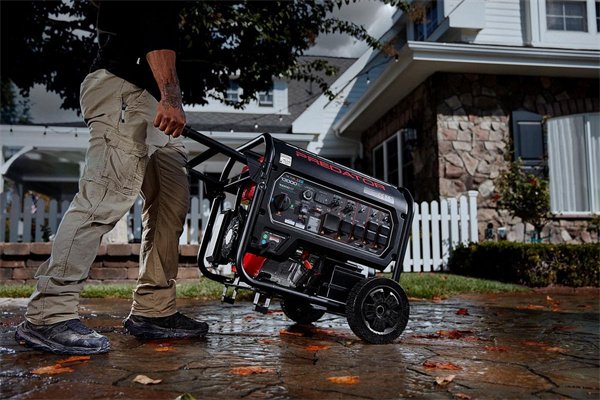
When the lights go out, or your job site demands serious muscle, nothing beats the peace of mind that comes with reliable, substantial power. That's precisely why the Predator 13000 Watt Generator Reviews & Real-World Performance are so often discussed among homeowners, contractors, and anyone needing a robust backup solution. This isn't just another generator; it's a heavy-duty workhorse designed to keep critical systems humming when everything else grinds to a halt.
Whether you're looking to power a whole house during a prolonged outage, run multiple heavy-duty tools on a remote construction site, or ensure your mobile business never misses a beat, the Predator 13000 aims to deliver. But does it truly live up to its impressive specifications in the real world? Let's dive deep.
Predator 13000 Watt Generator: At a Glance
- Serious Power Output: 13,000 peak watts, 10,500 running watts – enough for most home essentials and demanding job site tools.
- Robust Engine: Features a 670cc V-twin OHV gas engine for smoother, more consistent power.
- Value Proposition: Offers an exceptional power-to-price ratio, significantly undercutting comparable national brands.
- Extended Runtime: Up to 9 hours at 50% load on its 8.75-gallon fuel tank.
- Versatile Outlets: A wide array of 120V and 240V options, including a 50A outlet.
- Easy Starts: Electric start with a reliable recoil backup.
- Built for Durability: Full-wrap tubular steel frame and 10" never-flat tires.
- Heavy-Duty Mobility: Weighs 352 pounds but includes a wheel kit and fold-down handles for transport.
Unpacking the Powerhouse: Specs That Matter
At its core, the Predator 13000 is built for one thing: delivering serious power. With 13,000 starting watts and 10,500 running watts, this generator punches well above its weight class when it comes to affordability. You're looking at a machine capable of handling simultaneous high-demand applications without flinching.
It's driven by a 670cc V-twin OHV gas engine, a design choice that contributes significantly to its smooth operation and reduced vibration compared to single-cylinder alternatives. This engine sips from an 8.75-gallon fuel tank, providing an impressive up to 9 hours of runtime at 50% load. That's a full night's sleep, or a solid workday, without needing to refuel.
Starting is a breeze thanks to the electric start system, thoughtfully paired with a recoil backup for peace of mind. You also get 120V/240V selectable voltage, a comprehensive control panel, and Automatic Voltage Regulation (AVR) to protect your sensitive electronics. Safety features like Low Oil Shutdown are standard, preventing costly engine damage.
Perhaps one of its most important distinguishing features is the exceptional power-to-price ratio. While comparable national brands often hover around $2,500-$3,500, the Predator 13000 typically retails for $1,599-$1,999. This value makes high-wattage power accessible to a much wider audience.
Who Needs 13,000 Watts? Real-World Applications Explored
The sheer output of the Predator 13000 Watt Generator opens up a world of possibilities, making it a crucial asset for diverse users. Its robust real-world performance shines in situations where reliability and substantial wattage are non-negotiable.
Home Backup: Keeping the Lights (and AC) On
For homeowners, 10,500 running watts translates into true whole-house backup capability. During a power outage, you can comfortably run most essential systems simultaneously:
- Central Air Conditioning: (3500-5000W) – A game-changer in summer.
- Electric Water Heater: (3000-4500W) – Hot showers, even when the grid is down.
- Refrigerator/Freezer: (700W) – Keeping food fresh.
- Well Pump: (1000-2000W) – Essential for water supply in many rural homes.
- Lights, TVs, Computers: (Various) – Maintaining normalcy and connectivity.
This means less rationing and more living, even during extended outages.
The Job Site Warrior: Powering Professionals
Construction professionals know that downtime is costly. The Predator 13000 provides the muscle needed for demanding tools and equipment:
- Large Air Compressors: (2000-3000W) – Running pneumatic tools all day.
- Concrete Mixers: (850-1000W) – Keeping projects moving.
- Multiple Power Tools: (1500-2500W each) – Saws, drills, grinders, simultaneously.
- 240V Equipment: Welding machines and other heavy-duty machinery.
Its durable full-wrap tubular steel frame and 10-inch never-flat tires mean it can handle the rugged environment of a construction site, while the digital hour meter helps track maintenance intervals.
Beyond the Grid: Mobile Businesses & Remote Living
For mobile businesses, agricultural operations, or anyone embracing off-grid living, the Predator 13000 provides independent power:
- Commercial Refrigeration: (1500-3000W) – Food trucks, market stalls.
- Cooking Equipment: (3000-5000W) – Catering, outdoor events.
- Water Pumps: (1000-3000W) – Irrigation, livestock watering.
- Workshop Equipment: (2000-5000W) – Remote repairs, fabrication.
It's also a strong contender for emergency response teams or anyone needing reliable power in a remote location.
Tri-Fuel Ready: Adapting to Any Situation
While the standard Predator 13000 runs on gasoline, some variants or units with conversion kits offer tri-fuel capability, meaning they can operate on gasoline, propane (LP), or natural gas. This adaptability isn't just a convenience; it's a strategic advantage for disaster preparedness and ongoing operational flexibility.
- Disaster Preparedness: When gasoline might be scarce, having propane or natural gas as alternatives ensures you can still generate power.
- Extended Runtime: If you have a natural gas hookup, you can potentially run the generator indefinitely without refueling, a major benefit for long outages.
- Fuel Storage Benefits: Propane stores indefinitely without degradation, unlike gasoline, making it ideal for long-term emergency fuel reserves.
- Cleaner Operation: Propane and natural gas burn cleaner, producing fewer emissions and less carbon buildup, which can extend engine life and reduce maintenance.
- Cold Weather Performance: Gaseous fuels often start more reliably in cold conditions compared to gasoline.
Consider a tri-fuel conversion if you prioritize flexibility and long-term fuel security.
Getting Started: Setup & First Run
Even a powerful generator needs proper setup. The Predator 13000 is designed for user-friendliness, but attention to detail during initial assembly and operation is crucial for longevity and safety.
Initial Assembly: Build Your Power Base
- Wheel Kit Installation: Attach the wheels and support feet. The included 10-inch never-flat tires are a great feature for mobility, given the unit's 352-pound weight.
- Battery Connection: Connect the terminals on the included battery. This powers the electric start.
- Add Oil: Crucially, the generator ships without oil. You'll need to add approximately 1.7 quarts of SAE 10W-30 oil (or a synthetic equivalent for optimal performance). Never operate without proper oil levels.
- Fuel Up: Fill the 8.75-gallon tank with fresh, unleaded gasoline (87+ octane is recommended). Avoid old or contaminated fuel.
- Grounding: Ensure the generator is properly grounded using a grounding rod and wire, especially for prolonged use or connecting to a transfer switch.
Electric Start: The Easy Way
- Placement: Always place the generator outdoors in a well-ventilated area, at least 20 feet from any windows, doors, or vents. Carbon monoxide is a silent killer.
- Pre-Flight Check: Verify oil and fuel levels are adequate.
- Fuel Valve: Turn the fuel valve to the "ON" position.
- Choke: For a cold engine, move the choke lever to the "CLOSED" position. For a warm engine, keep it "OPEN."
- Start: Turn the key to "START" and hold it until the engine fires up.
- Choke Adjustment: As the engine starts and warms, gradually move the choke lever to the "OPEN" position.
Manual Recoil Backup: The Dependable Plan B
Should the battery be low or fail, the recoil start is your reliable backup:
- Initial Steps: Follow steps 1-3 from the electric start instructions.
- Key On: Turn the key to the "ON" position (do not turn it to "START").
- Pull Cord: Grasp the recoil starter handle. Pull it slowly until you feel resistance, then pull rapidly and firmly. Repeat if necessary.
- Choke Adjustment: Once the engine starts, gradually move the choke lever to "OPEN."
Safe Operation: Powering Responsibly
Safety is paramount when operating any generator, especially a powerful unit like the Predator 13000. Adhering to best practices protects you, your property, and those around you.
- Outdoor Use ONLY: Never operate indoors or in partially enclosed spaces. Carbon monoxide fumes are odorless and deadly. Maintain at least 20 feet clearance from buildings.
- Cooling Time Before Refueling: Always shut down the engine and allow it to cool completely before adding fuel to prevent fires.
- Proper Extension Cords: Use heavy-duty, outdoor-rated extension cords appropriate for the load and distance. Undersized cords can overheat and cause fires.
- Transfer Switch for Home Backup: For connecting to your home's electrical system, a professional electrician must install a manual transfer switch. This prevents backfeeding electricity into the utility grid, which can be fatal to utility workers.
- Load Management: Start larger motor-driven appliances (like well pumps or AC units) first, allowing them to stabilize, then add smaller loads. This prevents overwhelming the generator with high starting currents.
- Clearance: Ensure at least 3 feet of clear space around the generator for proper ventilation and cooling.
- Monitor Oil Levels: During extended operation, check the oil level daily and top off as needed.
Keeping It Running Strong: Maintenance Matters
Consistent maintenance is the secret sauce for extending the lifespan and ensuring the reliable real-world performance of your Predator 13000. Neglecting routine care can lead to costly repairs and unexpected failures.
Maintenance Schedule Highlights
- Before Each Use: Quick visual checks – engine oil, air filter cleanliness, fuel level, loose parts, clear cooling inlets.
- After First 20 Hours (Break-in): This is critical. Change the engine oil. Inspect and clean the spark arrestor. This initial oil change removes metallic wear particles from the new engine.
- Every 50 Hours / 3 Months: Change the engine oil. Clean the air filter (or replace if heavily soiled). Clean the fuel sediment cup. Inspect and clean spark plugs.
- Every 100 Hours / 6 Months: All 50-hour checks, plus: Replace spark plugs (if needed). Clean the fuel tank and fuel filter. Inspect fuel lines for cracks or leaks.
- Every 300 Hours / Annually: All 100-hour checks, plus: Replace spark plugs (if not already done). Replace the air filter. Clean the combustion chamber. Check and adjust valve clearance (best done by a qualified technician if unsure).
Long-Term Storage: Winterizing Your Workhorse
If you plan to store your generator for more than a month, proper preparation is essential to prevent fuel system issues and ensure it starts reliably next season.
- Fuel System:
- Option 1 (Preferred): Add a high-quality fuel stabilizer to the tank and run the engine for 10 minutes to circulate it throughout the fuel system.
- Option 2: Completely drain the fuel tank and carburetor bowl. Run the engine until it stops from lack of fuel.
- Oil Change: Perform an oil change. Fresh oil prevents corrosion inside the engine during storage.
- Cylinder Protection: Remove the spark plug and pour a small amount (about a tablespoon) of fresh engine oil into the cylinder. Slowly pull the starter rope a few times to distribute the oil, then reinstall the spark plug. This prevents rust on cylinder walls.
- Battery Care: Disconnect the battery terminals or connect it to a trickle charger to maintain its charge.
- Cover Up: Use a quality generator cover to protect it from dust, moisture, and physical damage.
Troubleshooting Common Predator 13000 Issues
Even with diligent maintenance, issues can arise. Knowing how to diagnose and address common problems can save you time and frustration.
Starting Problems: Why Won't It Fire Up?
- No Fuel: Check fuel level. Ensure the fuel valve is "ON." Use fresh, clean gasoline.
- Low Oil: The Predator 13000 has a low-oil shutdown. Check and top off the oil.
- Battery Dead/Loose: For electric start, check battery charge and connections.
- Spark Plug: Inspect the spark plug. Is it dirty, fouled, or damaged? Clean or replace it.
- Choke Position: Is the choke set correctly for a cold or warm start?
- Air Filter: A clogged air filter can starve the engine of air. Clean or replace it.
Power Output Problems: No Juice?
- No Electricity:
- Circuit Breakers: Check and reset the main circuit breakers on the generator's control panel.
- Voltage Selector: Ensure the voltage selector switch is set correctly (120V or 240V).
- AVR Failure: Less common, but a faulty Automatic Voltage Regulator can cause no output.
- Outlets Not Working:
- GFCI Outlets: Press the "Reset" button on any GFCI outlets.
- Overload: Reduce the total load connected to the generator.
- Fluctuating Voltage/Frequency: Could be due to an inconsistent load, carburetor issues, or a failing AVR.
Engine Performance Issues: Rough Running or Surging
- Old/Contaminated Fuel: The most common culprit. Drain old fuel and refill with fresh gasoline.
- Carburetor Issues: Clogged jets from old fuel can cause rough running. May require cleaning or rebuilding.
- Clogged Air Filter: Restricts airflow, leading to a rich fuel mixture. Clean or replace.
- Worn Spark Plugs: Can cause misfires and rough idle. Replace them.
- Altitude Effects: Generators perform differently at high altitudes. The carburetor might need adjustment for optimal performance.
Noise and Vibration: Is Something Loose?
- Loose Components: Check for any loose bolts on the frame, engine mounts, or exhaust system.
- Engine Mounts: Worn or damaged engine mounts can increase vibration.
- Extremely Low Load: Running a large generator with very little load can sometimes lead to rougher running.
- Exhaust System Damage: Leaks or damage to the muffler can increase noise.
The Real Cost of Ownership: Is the Value There?
Beyond the initial purchase price, understanding the ongoing cost of ownership helps solidify the Predator 13000's value proposition. Its competitive price point combined with reasonable operational costs make it a smart long-term investment.
Fuel Consumption: Planning Your Budget
At 50% load (around 5,250 watts), the Predator 13000 consumes fuel as follows:
- Gasoline: Approximately 1.0-1.2 gallons per hour.
- Propane: (with conversion kit) Approximately 1.6-1.8 gallons per hour.
- Natural Gas: (with conversion kit) Approximately 170-200 cubic feet per hour.
These figures are crucial for estimating your operational costs during extended outages or job site use.
Annual Maintenance: A Small Investment
For a unit used 50-100 hours per year (typical for emergency backup or moderate commercial use), annual maintenance costs are relatively low:
- Estimated Annual Cost: Approximately $90-$145 for oil changes, air filters, and spark plugs. This small investment drastically reduces the risk of major repairs.
Lifespan & Longevity: Years of Dependable Service
With proper break-in procedures and consistent maintenance, you can expect impressive longevity from your Predator 13000:
- Engine Longevity: 1,500-2,500 hours of operation.
- Generator Components: 1,000-2,000 hours.
- Frame/Chassis: 10+ years.
What does this mean in practical terms? - Emergency Backup Use: You could see 15-25 years of service, assuming a typical 100 hours of use per year.
- Regular Commercial Use: Expect 5-10 years of reliable service under more demanding conditions.
When you factor in the robust build quality, the comprehensive feature set, and this expected lifespan, the Predator 13000 generator truly presents a strong return on investment compared to renting equipment or relying on less powerful alternatives. If you're looking for a dependable workhorse, it's worth taking the time to Explore the Predator 13000 generator in detail.
Who's the Predator 13000 Really For?
Understanding the ideal user helps clarify if this generator aligns with your specific needs.
Ideal For:
- Homeowners needing whole-house backup: Its 10,500 running watts can manage most household essentials.
- Construction professionals: Powers demanding tools and 240V equipment on job sites.
- Mobile businesses: Reliable power for food trucks, outdoor events, or remote operations.
- Agricultural operations: For water pumps, workshop equipment, and barn power.
- Remote property owners & off-grid living: Provides a robust independent power source.
- Emergency response teams: A dependable unit for critical situations.
- Budget-conscious buyers: Seeking high power and durability without the premium brand price tag.
Not Ideal For:
- Ultra-quiet operation: While its V-twin engine runs smoother, it's a large conventional generator. For sensitive residential areas or camping where noise is a primary concern, a smaller inverter generator (like the Predator 3500, known for ~57 dBA) would be a better fit.
- Small-scale power needs: If you only need to run a few lights and a fridge, this is overkill.
- Very limited storage space: At 352 pounds and a substantial footprint, it requires adequate storage.
- Users unable to manage its weight: While it has wheels, moving 352 pounds still requires effort.
- Highly sensitive electronics without additional filtration: While AVR helps, for ultra-sensitive equipment, a pure sine wave inverter generator might offer cleaner power (though typically at a much lower wattage).
The Final Verdict: Power and Value You Can Count On
In the world of portable generators, the Predator 13000 Watt Generator stands out as a formidable contender, consistently delivering impressive real-world performance that matches its robust specifications. The numerous Predator 13000 Watt Generator reviews from users across various demanding applications consistently highlight its reliability and exceptional value.
It's a testament to the Predator brand's commitment to solid performance and affordability. By offering such substantial power at a fraction of the cost of comparable national brands, it democratizes access to serious wattage. From keeping your home resilient during an outage to powering an entire construction site, this generator is engineered to meet and exceed expectations.
With proper break-in, a diligent maintenance schedule, and adherence to safe operating practices, the Predator 13000 isn't just a purchase; it's a long-term investment in dependable power. It provides the confidence that when you need power the most, it's ready to work.