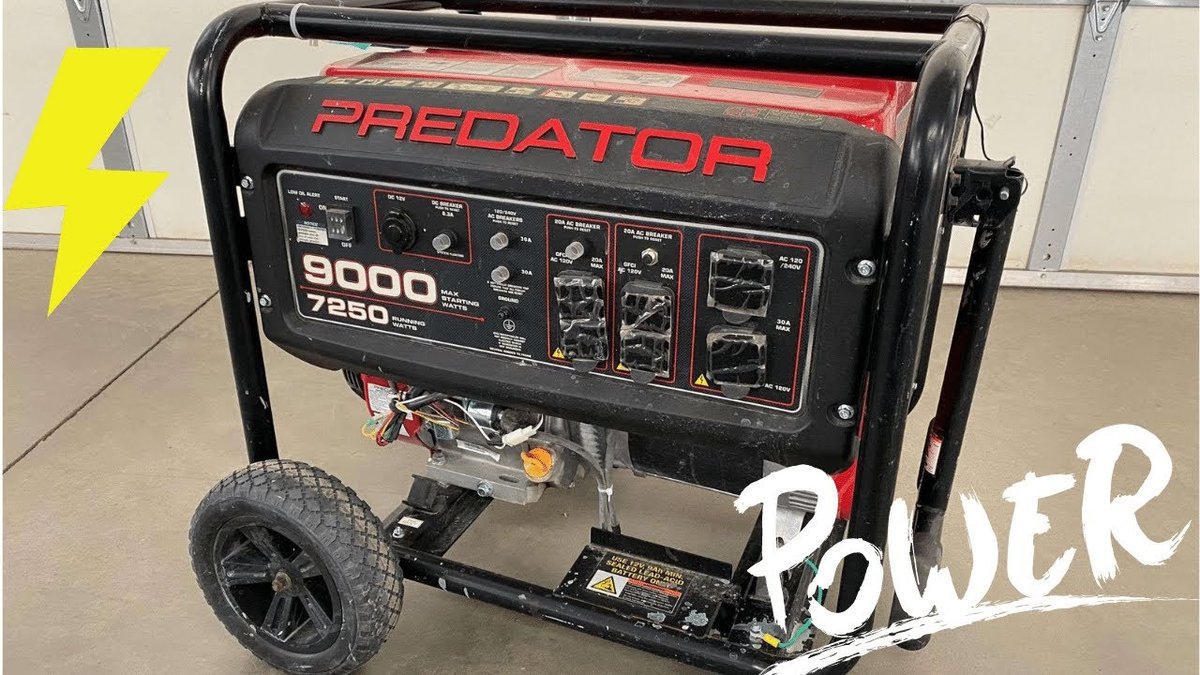
Owning a Predator 13000-watt generator means you hold a substantial power source in your hands—a robust safeguard against outages, ready to power your home or job site when the grid fails. But with great power comes great responsibility. Mastering the nuances of Predator 13000 Watt Generator Accessories & Safety Guidelines isn't just about maximizing your investment; it's about protecting yourself, your loved ones, and your property. This guide will walk you through everything you need to know, from essential safety protocols to the must-have accessories that will make your generator experience reliable and secure.
At a Glance: Key Takeaways for Your Predator 13000
- Safety First, Always: Never operate your generator indoors. Carbon monoxide is deadly.
- Fuel Facts: Use fresh, 87+ octane unleaded gasoline (max 10% ethanol). Store fuel safely.
- Ground It: Always earth-ground your generator according to local electrical codes.
- Don't Overload: The Predator 13000 offers 10,500 running watts, but know your limits.
- Essential Gear: Heavy-duty extension cords, fuel stabilizer, and a transfer switch (for home backup) are crucial.
- Maintain Regularly: Follow the schedule for oil changes, spark plug checks, and fuel system care.
- Hear It Out: With noise levels up to 82 dBA, ear protection is a must during operation.
- Professional Help: Any connection to your home's electrical system requires a licensed electrician.
The Powerhouse in Your Hands: Understanding Your Predator 13000
The Harbor Freight Predator 13000-watt generator (models 69728 / 69729) is a beast, designed to deliver 13,000 peak watts and a continuous 10,500 running watts. This kind of output means it can handle everything from a few crucial home appliances during an outage to heavy-duty tools on a construction site. Equipped with a powerful 670cc V-twin engine, electric start, and a substantial 8.75-gallon fuel tank, it promises around 7.5 hours of runtime at 50% load.
But harnessing this power effectively and safely requires understanding its operation, its potential hazards, and the right accessories to complement its strength. For a deeper dive into its full specifications and capabilities, check out our comprehensive Predator 13000 watt generator guide.
Non-Negotiable Safety First: Protecting Lives and Property
Before you even think about starting your Predator 13000, safety must be your absolute priority. Generators, while incredibly useful, pose significant risks if not handled correctly. We're talking about hazards that can result in DANGER, WARNING, or CAUTION situations, leading to serious injury or even death.
The Silent Killer: Carbon Monoxide Hazard
This is the most critical safety message for any generator owner: NEVER use a generator indoors. Your generator's exhaust contains carbon monoxide (CO), a colorless, odorless gas that can kill in minutes. It's a hazard that can quickly overcome you without warning.
- Outdoor Use ONLY: Always operate your Predator 13000 outdoors, far away from windows, doors, and vents that could allow exhaust fumes to seep into your home, garage, basement, or shed. A minimum distance of 20 feet from any building is generally recommended, with the exhaust pointed away from occupied areas.
- CO Detectors: While outdoor use is paramount, installing battery-operated carbon monoxide detectors with alarms in your home provides an extra layer of protection, especially for detecting any potential backflow or leaks. If anyone experiences sickness, dizziness, or weakness while the generator is running, get to fresh air immediately.
Fire & Explosion Hazards: Fuel Handling & Storage
Gasoline and its fumes are highly flammable and explosive. Mishandling fuel or operating your generator near ignition sources can lead to devastating fires.
- Safe Fuel Storage: Store gasoline in approved, clearly labeled containers, away from living areas, heat sources, and direct sunlight.
- No Refueling While Hot: WARNING: Never fill the gas tank while the engine is running or hot. Gasoline can ignite on contact with hot engine parts. Always turn the engine off and allow it to cool completely before adding fuel.
- Immediate Spill Cleanup: Clean up any spilled gasoline immediately with absorbent materials. Properly dispose of the soiled materials.
- Keep Clear of Flammables: Do not operate or store your generator near pilot lights, open flames, sparks, or other ignition sources. Keep the area around the generator free of flammable materials.
- Fire Extinguisher Ready: Have an ABC-class fire extinguisher readily accessible near your generator.
Electrical Shock & Backfeed: Professional Installation & Grounding
Electricity from a generator, if improperly managed, can be lethal. The risk of electrical shock and backfeed into the utility grid is extremely serious.
- Professional Transfer Switch: If you plan to connect your Predator 13000 to your home's electrical system for whole-house backup, you must have a qualified, licensed electrician install a manual transfer switch. This critical device isolates your generator's power from the utility grid, preventing "backfeed" that could electrocute utility workers or neighbors. DANGER: Attempting to backfeed power without a transfer switch can result in death or serious injury.
- Proper Grounding: Always earth-ground your generator before operation. The Predator 13000 includes a grounding terminal. You'll need a #6 AWG grounding wire (not included) connected to a copper or brass grounding rod driven at least 24 inches deep into the earth, in accordance with all local electrical codes.
- Don't Overload: The Predator 13000 has a maximum running watt rating of 10,500. Exceeding this, or its 13,000 peak watt capacity for startup loads, can damage the generator and attached appliances. Your generator has circuit breakers designed to trip if overloaded; if they do, unplug devices, allow the generator to cool, reset the breaker, and restart. Distribute loads evenly across outlets to prevent tripping.
- Dry Conditions: Avoid contact with energized parts or operating the generator in wet conditions (rain, snow). Keep your hands dry and wear insulated gloves when handling electrical connections.
Personal Safety: Protecting Yourself During Operation
Your personal safety is paramount when working with a powerful machine like the Predator 13000.
- Hearing Protection: With noise levels reaching 76-82 decibels at 23 feet, operating your generator without ear protection can cause permanent hearing damage. CAUTION: Always wear ANSI-approved ear protection.
- Eye & Hand Protection: Wear ANSI-approved safety goggles and heavy-duty work gloves during setup, operation, and service to protect against debris, fuel splashes, and hot surfaces.
- Hot Parts: The engine and exhaust system become extremely hot during operation. Allow the engine to cool completely before performing any service or storage procedures to avoid severe burns.
- Clear Operating Zone: Keep children and spectators at least six feet away from the generator during operation.
- Pacemaker Warning: Individuals with pacemakers should consult their physician before operating the generator due to potential electromagnetic field interference.
Operational Environment: Placement and Ventilation
Proper placement is key for both safety and optimal performance.
- Flat, Level Surface: Set up and use your generator on a flat, level surface to ensure proper oil circulation and stable operation.
- Unobstructed Airflow: Ensure the generator is well-ventilated. Do not cover the generator or engine during operation, as this can lead to overheating and damage. Keep the cooling air intake and exhaust vents clear of obstructions.
Maintenance Safety: Preparing for Service
Before performing any maintenance, inspection, or cleaning, follow these crucial steps to prevent accidental startup or injury:
- Unplug all connected devices.
- Turn the engine switch to the OFF position.
- Allow the engine to cool completely.
- Remove the spark plug cap to prevent accidental starting.
- NOTICE: Only qualified service technicians should perform complex repairs. Do not alter or adjust sealed engine parts.
Essential Accessories for Your Predator 13000: Enhancing Utility and Longevity
Beyond safety, certain accessories significantly enhance the functionality, convenience, and lifespan of your Predator 13000. Think of these as investments that empower your generator.
Fuel Management: Keeping the Power Flowing
- Approved Fuel Cans: Durable, clearly labeled, and spill-proof fuel cans are vital for safe gasoline storage and transport. Ensure they meet local regulations.
- Fuel Stabilizer: For gasoline stored longer than 30 days, a high-quality fuel stabilizer is a must. It prevents fuel degradation, gumming, and corrosion in the carburetor, which is a common cause of starting issues after storage.
- Fuel Funnel with Filter: A funnel helps prevent spills, and one with a built-in filter can help keep debris out of your fuel tank, protecting the engine.
Electrical Connectivity: Getting Power Where You Need It
- Heavy-Duty Outdoor Extension Cords: Given the Predator 13000's high output, invest in extension cords rated for outdoor use and heavy loads. Look for 10-gauge or 12-gauge cords for longer runs and higher wattage appliances to minimize voltage drop and prevent overheating.
- Generator Adapter Cords: Your generator has specific receptacles (e.g., NEMA #L14-30 twistlock). You may need adapter cords to connect to various appliances or a transfer switch inlet box. Ensure adapters are rated for the appropriate voltage and amperage. For RV use, an adapter to a 50A RV plug is often required.
- UL® Listed Voltage Surge Protector: While your generator has circuit breakers, sensitive electronics (TVs, computers, phones) benefit from a dedicated surge protector plugged into the generator's AC receptacles. This protects against minor voltage fluctuations that can occur.
- Manual Transfer Switch (for Whole-House Backup): As discussed under safety, this is non-negotiable for connecting to your home's electrical system. It isolates your house from the utility grid, ensuring safety for utility workers and preventing damage to the generator. Installation by a licensed electrician is mandatory.
- Inlet Box: Used in conjunction with a transfer switch, an inlet box provides a secure, weatherproof connection point outside your home for the generator's power cable.
Maintenance Essentials: Keeping Your Generator in Peak Condition
- Engine Oil (SAE 10W-30 or 5W-30): Regular oil changes are the single most important maintenance task. Keep recommended oil (SAE 10W-30 above 32°F, 5W-30 at or below 32°F) on hand. The Predator 13000 typically uses about 1.2 quarts. Running with low or no oil will permanently damage the engine and voids the warranty.
- Replacement Spark Plugs: Keep a spare spark plug (with the correct gap of 0.028″-0.031″) on hand. A fouled or worn spark plug is a common cause of starting problems or misfires.
- Air Filters: The air filter prevents dust and debris from entering the engine. Have a spare or cleaning supplies (if washable) to ensure your engine breathes clean air, especially if operating in dusty environments.
- Oil Drain Pan & Funnel: Makes oil changes much cleaner and easier.
- Cleaning Supplies: A dry cloth for general cleaning. Avoid using water on the engine.
- Spark Plug Wrench: Essential for spark plug inspection and replacement.
Storage & Portability Aids: Protection and Convenience
- Generator Cover: A durable, weatherproof cover protects your generator from dust, moisture, and UV rays during storage, extending its lifespan and keeping it ready for action.
- Security Cable/Lock: Given the value and portability, a strong security cable and lock can deter theft, especially if stored in an accessible outdoor location.
- Wheel Kit & Fold-Down Handles: The Predator 13000 comes with 10-inch never-flat wheels and fold-down handles, which are excellent for moving its substantial 206-pound dry weight. While included, recognizing their value is key for appreciating the generator's portability.
Safety Augmentations: Extra Layers of Protection
- ABC Fire Extinguisher: As mentioned, a quick-access extinguisher is vital.
- Portable CO Detectors: While outdoor operation is mandatory, a portable, battery-powered CO detector placed near a tent or RV (if using the generator for RV power) can provide an additional safeguard, although it should never replace proper outdoor placement.
Getting Started Right: Initial Setup and Operation Steps
Unboxing your Predator 13000 is exciting, but don't rush the setup. Following these steps ensures a safe and successful first start.
The Pre-Flight Checklist: Before You Start
- Inspect Thoroughly: Before each use, carefully inspect the generator for any damaged, loose, or missing parts. Ensure all connections are secure.
- Engine Oil Check: With the engine stopped and on a level surface, check the oil level using the dipstick (unthreaded). Fill with the recommended oil type (SAE 10W-30 for general use) to the full mark.
- Fuel Up Safely: Fill the 8.75-gallon tank to about 1 inch below the fill neck with fresh 87 octane or higher unleaded gasoline (maximum 10% ethanol (E10)). WARNING: Do not use E85.
- Ground It Properly: Connect a #6 AWG grounding wire from the generator's grounding terminal to a copper/brass rod driven at least 24 inches into the earth, following all local electrical codes.
- High Altitude Adjustments: If operating above 3,000 feet, your carburetor/governor may need adjustment by a qualified mechanic, or an altitude kit installed, to prevent damage and maintain efficiency. Performance may still decrease above 8,000 feet.
Firing It Up: Starting the Engine
- Disconnect Loads: Always unplug all electrical loads from the generator before starting.
- Choke Position: If the engine is cold, move the choke lever to the "CHOKE" position. For a warm engine, leave it in "RUN."
- Fuel Valve Open: Open the fuel valve.
- Engine Switch ON: Turn the engine switch to the "ON" position.
- Start It:
- Electric Start: Press and hold the electric start button (battery included) until the engine starts.
- Recoil Start (Backup): Pull the starter handle slowly a few times to prime, then gently until resistance is felt, and pull quickly. Repeat until the engine starts.
- Warm-Up: Allow the engine to run for several seconds. If the choke was used, slowly move the choke lever to the "RUN" position. Let the engine run at no load for five minutes to stabilize.
Break-in Period: Nurturing Your New Machine
Your Predator 13000 needs a break-in period for optimal longevity.
- Operational Break-in (First 3 Hours): Avoid applying heavy loads during the initial 3 hours of operation. Run it at varying, moderate loads.
- Maintenance Break-in (First 20 Hours): It's critical to change the engine oil after the first 20 hours of use to remove any manufacturing debris.
Connecting Loads Smartly: Powering Your Devices
Calculating total running watts (must be < 10,500) and total startup watts (must be < 13,000) for your items is crucial. Remember, Volts x Amps = Watts.
- Plug-in Sequence: Connect items in a specific order to prevent overloading and ensure smooth operation:
- First, items requiring the most wattage (e.g., large tools, well pumps).
- Next, "inductive" load appliances (those with motors like small hand tools, refrigerators).
- Then, lights.
- Finally, voltage-sensitive appliances (TVs, microwaves, phones) using a UL® Listed voltage surge protector.
- NOTICE: Failure to follow this sequence can damage the generator and/or your appliances, potentially voiding the warranty.
- Choke Adjustment Under Load: If engine speed or voltage fluctuates under load, especially with sensitive appliances, try moving the choke lever to "HALF-CHOKE" temporarily.
- Distribute Loads: Distribute your loads as evenly as possible over the available AC receptacles to avoid tripping individual circuit breakers.
Stopping Safely: The Shutdown Procedure
- Normal Shutdown:
- Turn off all connected electrical loads, then unplug them from the generator.
- Turn the engine switch to the OFF position.
- Close the fuel valve.
- Emergency Shutdown: In an emergency, simply turn the engine switch to the OFF position. NOTICE: Shutting off the generator under load may cause damage to the generator and any attached equipment.
Keeping It Running: Maintenance for the Long Haul
Regular maintenance is the bedrock of reliable generator performance. Following the recommended schedule from Harbor Freight will extend the life of your Predator 13000 and ensure it's ready when you need it most.
Routine Checks (Before Each Use)
- Visual Inspection: Brush off the outside of the engine, looking for any debris, leaks, or loose parts.
- Engine Oil Level: Check the oil with the dipstick, ensuring it's at the full level.
- Air Cleaner: Inspect the air cleaner for excessive dirt or obstructions.
- Fuel Deposit Cup: Check the deposit cup for any sediment.
Periodic Service: Deeper Care
| Maintenance Task | Schedule | Notes |
|---|---|---|
| Change Engine Oil | Monthly or every 20 hours (after first 20 hrs break-in) | More frequently in dusty areas. Approximately 1.2 quarts 10W-30. |
| Clean/Replace Air Cleaner | Monthly or every 20 hours | More frequently in dusty areas. |
| Check and Clean Spark Plug | Every 3 months or 50 hours | Gap: 0.028″-0.031″. Replace if worn. |
| Check/Adjust Idle Speed | Every 6 months or 100 hours | Qualified technician recommended. |
| Check/Adjust Valve Clearance | Every 6 months or 100 hours | Qualified technician required. |
| Clean Fuel Tank, Strainer, Carburetor | Yearly or every 300 hours | Qualified technician required. |
| Clean Carbon Build-up | Yearly or every 300 hours | Qualified technician required. |
| Replace Fuel Line | Every 2 Years or as needed | Qualified technician recommended. |
Load Testing: The "Use It Or Lose It" Principle
Run your Predator 13000 under a moderate load (at least 30-50% capacity) for at least 30 minutes monthly. This helps circulate fuel and oil, prevents fuel system issues, and ensures all components are functioning correctly. It's like exercising a muscle—it keeps your generator fit.
Storage Instructions: When Idle for Longer Than 20 Days
Proper storage is crucial to prevent common issues like carburetor problems and ensure your generator starts reliably after a long dormancy.
- Clean Thoroughly: Clean the exterior with a dry cloth. Apply a thin coat of rust-preventive oil to metal parts.
- Fuel System Drain:
- Drain the fuel tank completely.
- Drain the carburetor by removing the drain bolt and sediment cup (if applicable) and opening the fuel valve. Run the engine until it stops from lack of fuel if using fuel stabilizer, then drain if still needed.
- Engine Lubrication: Change the engine oil. Then, remove the spark plug, pour one tablespoon of engine oil into the cylinder, and pull the starter handle 1-2 revolutions (with the spark plug cap disconnected) to distribute the oil. Reinstall the spark plug and cap.
- Battery Care (if applicable): If your model has an electric start battery, disconnect the cables and recharge it monthly to maintain its charge.
- Storage Location: Cover the generator and store it in a dry, level, well-ventilated area, out of reach of children and away from any potential ignition sources.
- After Storage: If untreated gasoline sat for over a month, or treated gasoline beyond the stabilizer's effectiveness, drain and replace it with fresh fuel before attempting to start.
Troubleshooting: Common Challenges and Quick Fixes
Even with the best care, generators can sometimes act up. Here are common issues with your Predator 13000 and troubleshooting steps:
- Engine Will Not Start:
- Fuel: Check fuel level, ensure the fuel valve is open, use fresh 87+ octane unleaded gasoline (max 10% ethanol).
- Choke: Ensure the choke is in the correct position (CHOKE for cold, RUN for warm).
- Spark: Check spark plug connections, ensure the cap is firmly seated, and inspect the spark plug for fouling or improper gap (0.028″-0.031″).
- Oil: Ensure the oil level is correct. Low oil shutdown will prevent starting.
- Fuel Flow: Check for clogged fuel lines or carburetor.
- Engine Stops Suddenly:
- Low Oil Shutdown: Check engine oil level and refill if low. This is a crucial safety feature.
- No Fuel: Check fuel tank level.
- Fuel Cap Vacuum: Ensure the fuel tank cap vent is not blocked.
- Spark Plug Cap: Ensure the spark plug cap is securely connected.
- Engine Misfires / Knocks / Backfires:
- Spark Plug: Check/clean/gap/replace spark plug.
- Fuel Quality: Use fresh, high-quality fuel. Stale or contaminated fuel is a common culprit.
- Overload: Reduce the load on the generator.
- Air Filter: Clean or replace the air filter.
- Product Doesn't Have Power:
- Circuit Breakers: Check if any AC receptacle circuit breakers have tripped. Reset them.
- Load: Ensure the total load is within the generator's running watt capacity (10,500W).
- Appliance Issue: Test the appliance directly if possible to rule out an internal problem.
- Engine Stops Under Heavy Load:
- Air Filter: Clean the air filter.
- Warm-up: Allow the engine to warm up adequately before applying heavy loads.
- Overload: Reduce the load to within operational limits.
For more complex issues, or if troubleshooting doesn't resolve the problem, contact Harbor Freight technical support (1-800-444-3353 for generator, 1-800-520-0882 for engine) or a qualified service technician. Remember, unauthorized repairs can void your warranty.
Maximizing Your Investment: Tips for Longevity & Value
Your Predator 13000-watt generator is a significant investment. Here’s how to ensure it serves you reliably for years to come:
- Fuel Management is Key: Carburetor problems from stale fuel are the most common generator headaches. Always use fresh fuel, and for any storage longer than a few weeks, use a fuel stabilizer or drain the fuel system completely. Running the engine dry before storage is excellent practice.
- Regular Exercise: Monthly load testing for 30 minutes prevents fuel system issues and keeps components lubricated.
- Environmental Protection: While the steel frame is robust, a generator cover protects against elements and dust during storage. Store it in a relatively temperature-controlled environment if possible, especially during extreme cold, as cold weather starting (<40°F) can be more challenging without a block heater.
- Keep Your Manual Handy: The owner's manual (specific to Item 69728 / 69729) is your ultimate guide for detailed specifications, maintenance schedules, and warranty information.
- Understand the Warranty: Harbor Freight provides a 90-day limited warranty for defects, and a separate 2-year Emission Control System Warranty. Proper maintenance (and keeping receipts!) is crucial to uphold these. Damage from misuse, abuse, or lack of maintenance is not covered.
Making the Smart Choice: Wrapping Up Your Generator Journey
Your Predator 13000-watt generator is a powerful, dependable tool for backup power. By prioritizing safety, investing in the right accessories, and committing to a consistent maintenance schedule, you can ensure it performs flawlessly when you need it most. From safeguarding against carbon monoxide to preventing electrical hazards and keeping the engine humming, these guidelines are your roadmap to responsible generator ownership. Take these steps seriously, and your Predator 13000 will be a reliable workhorse for years to come, providing peace of mind during any power disruption.